Your weekly dose of FACTS |
|

|

Also in this week's newsletter TikTok 'anniversary' free data scam || Fake correctional services learnership ad in SA || Kenya not replacing teachers as exam supervisors || West African exam body hasn't deployed security forces |
🔕 Skip the noise – get verified news and practical tips on WhatsApp. Join our free channel or subscribe to the WhatsApp digest. |
From the fact-checking desk 🔎 |
Facts before fear |
From recycled videos to false claims and misleading headlines, misinformation often thrives during uncertain times. We’ll help you identify the red flags, verify information and stay informed. |
|
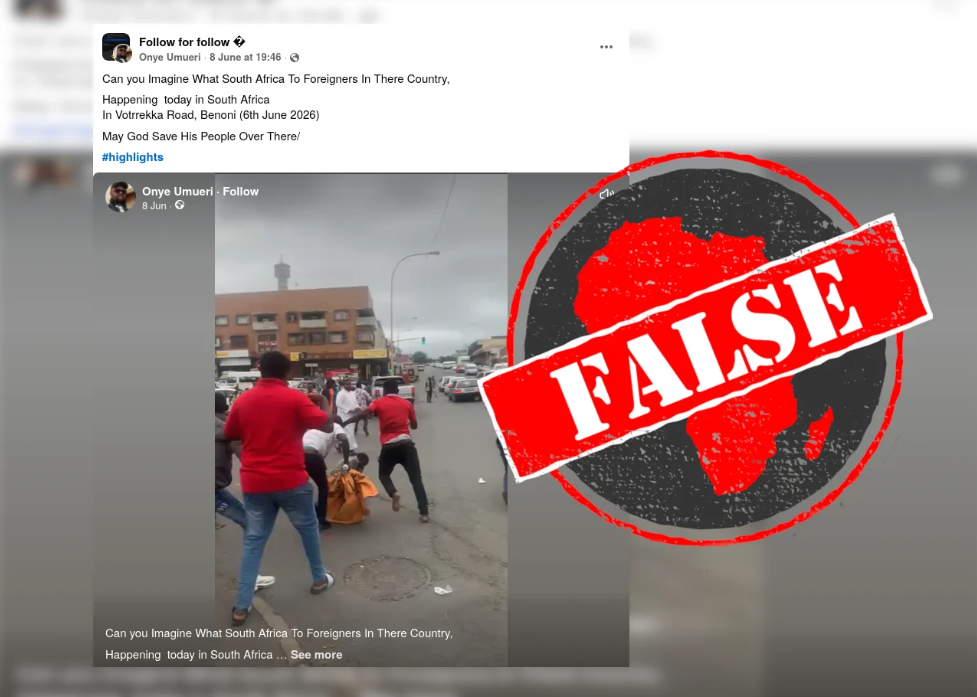
A video can be real — and still be misleading.
We looked at a graphic video falsely claimed to show xenophobic violence in Benoni, Johannesburg in June 2026.
It was actually filmed months earlier in KuGompo City in the Eastern Cape and was unrelated to recent attacks on migrants.
Remember: Real footage + false context = misinformation.
Before sharing, ask: |
🆘 Help us put facts over fear. Your support keeps independent fact-checking free and accessible for everyone. |
|
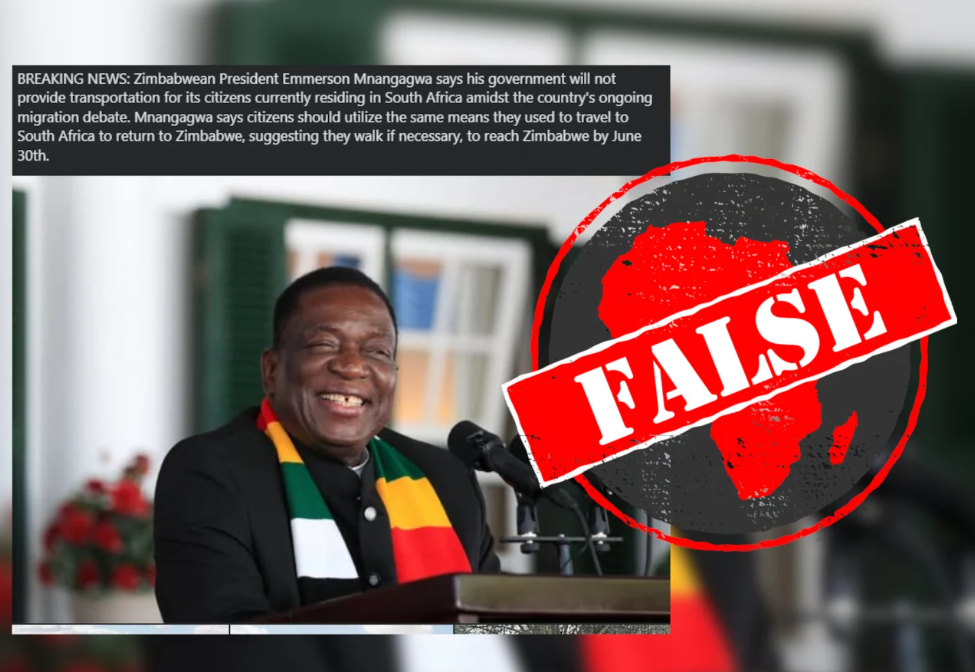
Watch out for fake “breaking news”
A viral post claimed that Zimbabwe’s president said citizens fleeing South Africa would not receive transport and should “walk” back home.
There is no evidence that this statement was made. Zimbabwean authorities have said they are assisting citizens who want to return, including through transport support.
How to spot this type of misinformation: |
Migration disinformation in South Africa — 4 key trends |
Anti-migrant sentiment is rising in South Africa, alongside a surge in false or misleading content spreading on social media and WhatsApp. We've singled out four key patterns.
1. Recycled / AI visuals
2. Fake or distorted quotes
3. Fake “official” documents
4. WhatsApp voice notes
Why it matters |
📲 Seen something suspicious online? Reply to this email, submit it via our website, or send it to us on WhatsApp or social media. |
What didn't happen 🚫 |
A roundup of some of the most popular but completely untrue stories and visuals of the week. None of these are legit, despite being widely shared. |
South Africa 🇿🇦
SCAM: ‘Municipality is hiring’ advert just another job scam – visit verified platforms for legit opportunities.
SCAM: No, TikTok not giving away free data to commemorate anniversary.
SCAM: ‘Correctional services learnership 2026’ debunked by South African government department.
Kenya 🇰🇪
FALSE: No, Kenya’s Mediamax has not announced Kameme FM will go offline.
FALSE: Kenya’s national exams body denies planning to replace teachers with non-teachers as test supervisors.
SCAM: Kenya Medical Research Institute dismisses claims about recruiting volunteers for malaria study.
FAKE: Fake graphics used to claim Indian doctor contracted to poison former Kenyan prime minister Raila Odinga.
Nigeria 🇳🇬
FALSE: Nigeria’s ruling party has not released final list of senatorial candidates for 2027 elections.
FALSE: West African exam body did not announce deployment of security agencies to 2026 test centres. |
How do you like this newsletter? |
|

|

|

Love this newsletter? Please take a moment to forward it to your friends or family, or they can subscribe here. |
Thanks for reading!
Your weekly dose of facts in newsletter form is created by Laura Kapelari (@laurakapelari). It is edited by Lee Mwiti (@LMAfrican) and Cayley Clifford (@cayleyclifford). |
|


