Your weekly dose of FACTS |
|

|

Also in this week's newsletter Sexual offences against children in SA || Fake fibroids cure || How safety + free speech can co-exist || Kenya's Ruto not seeking new running mate |
Get verified news and tips straight to WhatsApp — subscribe for free! |
Our Tips of the Week ✅ |
A recent study found hormone-disrupting chemicals in menstrual products sold in South Africa.
The findings sparked dozens of headlines in the last week, along with panic, anger and questions around transparency. On social media, the results have at times been exaggerated or entirely misinterpreted.
In such cases, here's how you can cut through the noise.
1) Find the original research paper
It seems obvious, but start by reading the paper. Many key details, including limitations, are only found there. Guides such as those from the Open Notebook on reading scientific papers and long documents can help you break down complex studies into clear takeaways.
2) Is there causation or correlation?
Scientists are careful about making direct links – that event A causes event B, which is called a causal relationship. Scientists have to supply a lot of evidence to prove that one thing directly causes another. Instead, they are more likely to say there was a correlation between event A and event B – that is, there is a relationship between the two.
3) Contact the authors
The paper should list the details of the corresponding or lead researcher. If you have questions about their findings, don’t hesitate to ask. Researchers can clarify what their findings do, and don't, show.
4) Be wary of sensational language
Remember that good science journalism should explain why findings matter and provide basic context, such as how the research was done and what remains uncertain. |
Africa Check in the wild 👩🏫 |
AmaFacts ayaVUMA on VumaFM
Listen in weekly to get the facts on the week’s biggest claims.
Vuma FM | 103FM | Mondays at 20h30 |
|
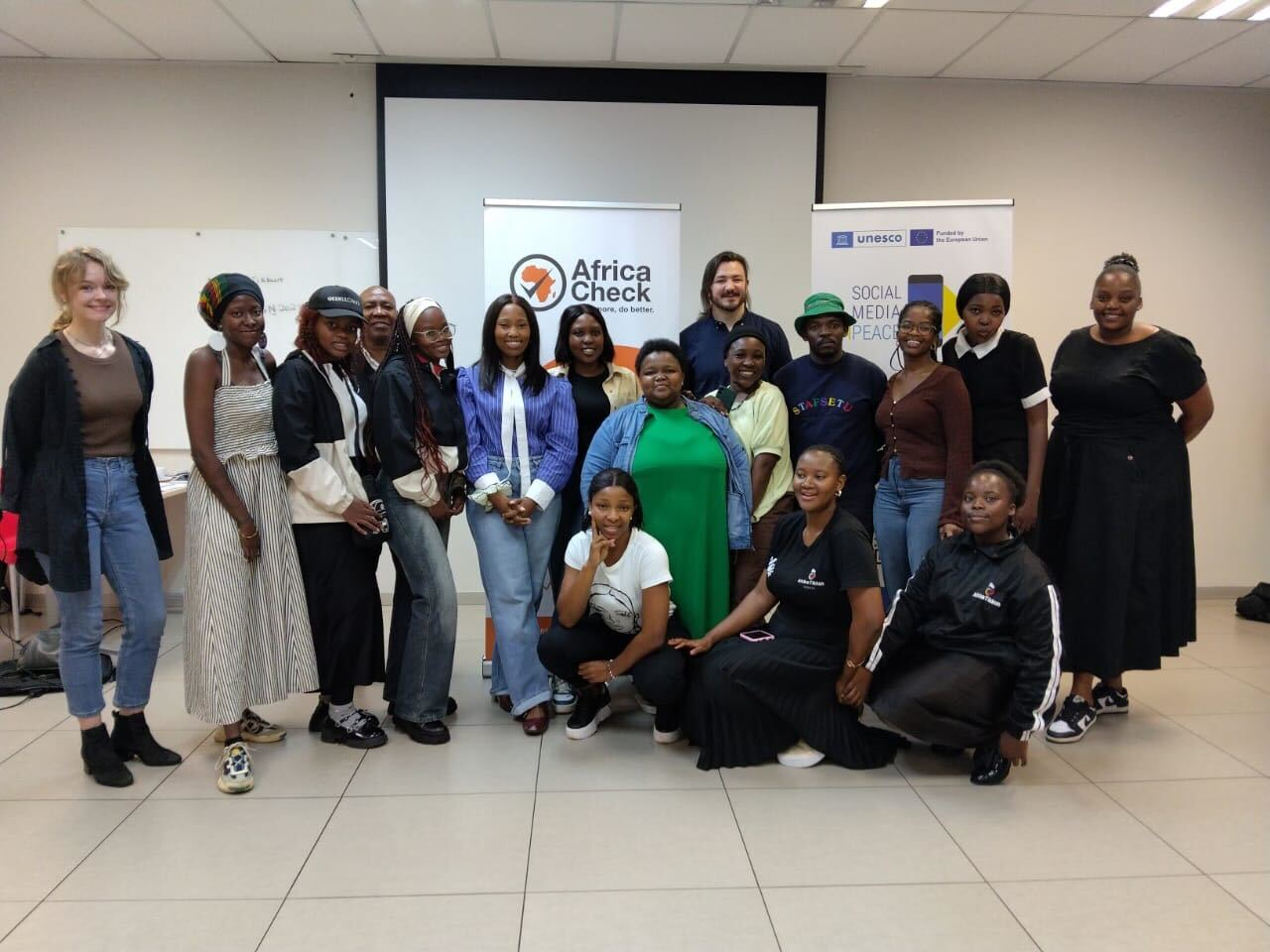
Social Media 4 Peace (SM4P)
With support from UNESCO, Africa Check is running an intensive two-day training programme under the Social Media 4 Peace initiative, aimed at helping youth-led organisations integrate media and information literacy (MIL) into their work.
Youth organisations play a vital role in shaping digital engagement, civic participation and information integrity. However, they face challenges navigating misinformation, disinformation, online safety and mental health issues in online spaces. Through practical, participatory sessions, the training is designed to equip participants with both the knowledge and tools to apply MIL.
The first training took place in Johannesburg on 24 and 25 February, bringing together representatives from eight youth-led and community organisations in South Africa for engaging conversations on hate speech, false information, digital safety and online wellbeing. |
|

|
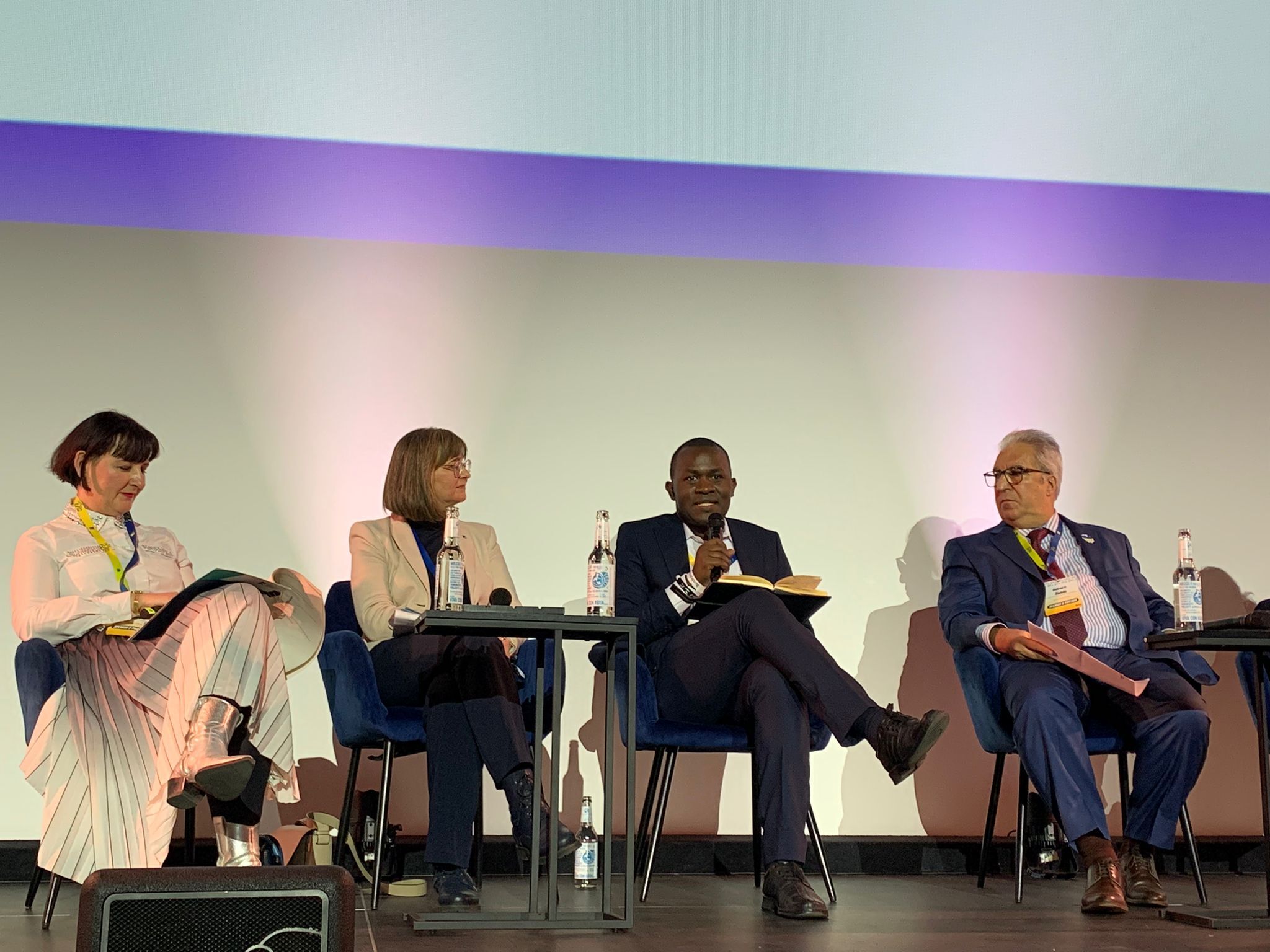
Cafe Kyiv: a global conference on Ukraine
At the invitation of the Konrad Adenauer Stiftung, Kenya editor Alphonce Shiundu represented Africa Check at Cafe Kyiv, held on 23 February 2026 in Berlin, Germany.
During a panel discussion, he highlighted Russia’s disinformation tactics and strategies for information operations in Africa, as the country fights off its geopolitical competitors in a “hybrid warfare”.
In a multipolar world, with immense interest and geopolitical competition for African resources, markets and labour, foreign information manipulation and interference (FIMI) is a real challenge.
"We must expose the geopolitical actors who pollute public debate in Africa, and teach more and more people how to spot FIMI, alert governments about the dangers of hybrid warfare, and make FIMI part of the information integrity toolkit in all countries on the continent, more so in the age of artificial intelligence," Shiundu said.
"Priority should be given to those African countries whose information environments are at high risk of being polluted, or those whose environments are already captured and clouded by geopolitical competition and confrontation." |
|
Who checks the facts? "Behind the Facts" interviews the fact-checkers fighting misinformation. |
What didn't happen 🚫 |
A roundup of some of the most popular but completely untrue stories and visuals of the week. None of these are legit, despite being widely shared. |
PARTLY FALSE: Claims that tea made with the leaves of the neem plant can kill intestinal parasites and cure a host of other ailments are circulating on Instagram. But there is not enough evidence to support the use of these home remedies.
FALSE: Some social media posts claim that a mixture of Stoney ginger drink and grated onions can shrink fibroids or ovarian cysts. But this is false; there is no evidence that home remedies can shrink, cure or eliminate these conditions.
SCAM: Messages doing the rounds on WhatsApp and Facebook claim that Zambia's electoral commission is hiring. But the link included leads to a phishing warning, and the commission says the recruitment notice is false.
Kenya 🇰🇪
FALSE: Social media in Kenya is awash with graphics claiming the board of the Kenya Electricity Transmission Company is composed entirely of members of the Kalenjin ethnic group. But this is false.
FAKE: Graphics claiming Kenyan president William Ruto is seeking an alternative running mate to deputy president Kithure Kindiki for the 2027 polls are circulating online. However, they are fake.
FALSE: A notice warning Kenyans that politician and senior United Democratic Alliance member Elijah Sawe has been barred from the ruling party is circulating on social media in Kenya. However, the party has dismissed it as fake.
Nigeria 🇳🇬
SCAM: Videos of Nigerian billionaire and philanthropist Aliko Dangote seemingly urging Nigerians to invest in a new programme are online. But the programme is a scam and the videos have been manipulated.
FALSE: Some Facebook users claim that US soldiers have arrested Nigeria’s senate president, Godswill Akpabio. But there is no evidence to support the claim.
FALSE: Amid calls for a political solution to the case of jailed Biafra separatist leader Nnamdi Kanu, a report circulating on Facebook claims that he has rejected close to US$75 million and a chance to meet with Nigeria’s president, Bola Tinubu. But no evidence supports the claim. |
Info Finder Tool 🌍 |
❓This week, we answer a question about crime that you submitted through our Info Finder tool:
|
How do you like this newsletter? |
|

|

|

Love this newsletter? Please take a moment to forward it to your friends or family, or they can subscribe here. |
Thanks for reading!
Your weekly dose of facts in newsletter form is created by Laura Kapelari (@laurakapelari). It is edited by Lee Mwiti (@LMAfrican) and Cayley Clifford (@cayleyclifford). |
|


